Table of Contents
Key Takeaways
-
Foundation Mass Capacity: A filled 2,500-liter potable water cistern exerts 2.5 tonnes of force, needing an engineered concrete foundation to stop structural failure from happening
-
Proximity to Utilities: Installing your liquid storage reservoir near primary plumbing entry points minimises pipeline hydraulic friction and excavation requirements.
-
Regulatory Compliance: Full adherence to standard plumbing codes prevents municipal cross-contamination and guarantees systemic durability.
-
Professional Certification: Hiring a PIRB-registered (Plumbing Industry Registration Board) plumbing team protects your equipment warranty ensures there is structural safety.
Durban homeowners face continuous infrastructure challenges due to regular water shedding and municipal supply interruptions. Putting in an independent back-up water supply protects your household from unpredictable utility service outages. A JoJo tank serves as a reliable risk mitigation strategy, keeping your taps functional when the main line fails. Achieving full operational efficiency requires strategic, expert-led installation planning.
Technical Specifications: The Core Mechanics of Installation Site Selection
How much does a full JoJo tank weigh?
Structural weight is the most important variable on every installation site. A normal 2500 litre water supply is around 1,400mm in diameter and 1,750mm in height, with a total mass of 2.5 tonnes when it's full. A bigger 5,000L liquid storage reservoir has a mass of 5 tonnes.
What are the plumbing logistics for a back-up water supply?
Plumbing layout directly dictates the operational efficiency of your municipal backup network. Our plumbing team must tie the outlet pipe directly into the main domestic water intake line of your house. Placing the potable water cistern far from this primary intake line requires extensive trenching across lawns and driveways. Long pipe runs increase hydraulic friction, which directly reduces water pressure at your interior taps.
When setting up your water storage, it is helpful to look at practical plumbing examples, such as this guide on connecting a JoJo tank to the mains supply.
What electrical access is required for an operational liquid storage reservoir?
Automated backup systems use specialised motorised equipment to distribute water into your home. A high-performance pressure booster, such as the DAB E.sybox pump, requires a dedicated, weatherproof electrical supply. Running long external cables from distant power outlets increases installation costs and system vulnerability. Putting your tank near an existing electrical distribution source improves structural safety and lowers setup expenses.
Choosing Where to put your Jojo tank
Where is the most discreet place for my tank?
The under used side passage of a suburban property offers an excellent place for structural integration. This specific positioning removes the bulk of the equipment from your primary line of sight, preserving your property value. For narrow spaces, specialised low-maintenance infrastructure like the JoJo Slimline series fits securely against boundary walls without obstructing walkways. This positioning also places the liquid storage reservoir close to primary kitchen and bathroom plumbing connections.
Can I install a tank on a sloped garden?
Hilly terrain in areas such as Kloof, Hillcrest, and Cowies Hill provides distinct geographic installation choices . Putting your potable water cistern at the highest elevation of a sloped garden establishes a natural gravity-feed system. This arrangement provides enough baseline pressure to operate lower-level taps and toilets during electrical grid failures. However, sloped installations require engineered retaining walls and level bases to mitigate erosion.
Is placing a potable water cistern next to the garage effective?
Positioning your backup water equipment adjacent to an external garage or outbuilding simplifies your utility connections. Garages feature extensive, unobstructed roof catchments that maximize rainwater harvesting collection volumes. These structures include accessible internal electrical circuits, enabling a seamless hookup for your pressure pump system. Furthermore, the tall, blank walls of a garage naturally camouflage the vertical profile of a large tank.
Can a liquid storage reservoir integrate into my outdoor entertainment zone?
Integrating your backup supply into a swimming pool area or patio zone delivers excellent functional proximity. Homeowners use this stored water to counteract pool evaporation losses without drawing from municipal lines during restrictions. Our plumbing company could hide he equipment using treated timber cladding or strategic landscaping features like Strelitzia plants. This design approach turns a utility asset into a complete landscape feature.
System Type |
Primary Advantages |
Critical Limitations |
Best Suited For |
|---|---|---|---|
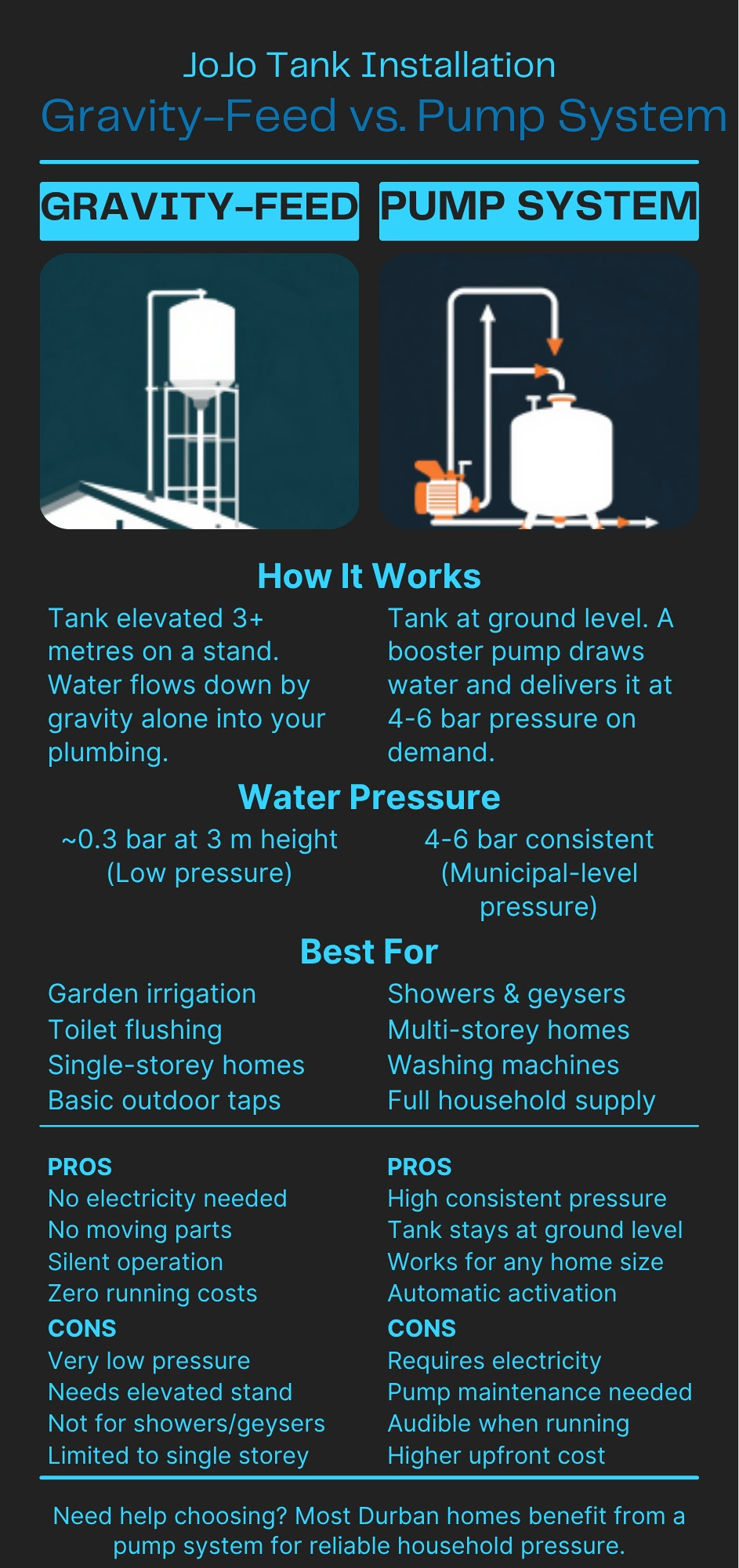
| Gravity-Fed System | Operates without electricity during load shedding; features zero ongoing running costs; requires minimal mechanical maintenance. | Delivers low water pressure (0.1 bar per meter of height); cannot power modern double-story homes or high-pressure appliances. | Properties with significant natural elevation changes or basic emergency backup needs. |
| Pump-Driven System | Guarantees consistent high pressure (up to 4.5 bar using a DAB E.sybox pump); integrates seamlessly with advanced filtration units. | Depends entirely on electrical power or backup generators; involves moving parts that require periodic maintenance. | Modern multi-story homes, complex multi-bathroom layouts, and premium residential properties. |
Real Stories: Documented Installation Engineering in Durban Communities
Addressing Complex Logistical Challenges in Kloof
The Govender family sought an innovative backup water solution for their multi-level residence situated on a steep Kloof hillside. Topographical limitations had presented significant deployment difficulties for independent handymen. Our plumbing team examined the the property line and designed a tiered structural solution.
We excavated a stable, level tier into the hillside and cast a steel-reinforced concrete base. Our technicians installed a 5,000-liter liquid storage reservoir anchored firmly to the new retaining platform. We integrated a DAB E.sybox pump system to distribute water efficiently against the uphill gradient. The family now experiences uniform, high-pressure water delivery across all levels of their home regardless of municipal supply interruptions.
Achieving Seamless Driveway Integration in Durban North
A resident in Durban North required emergency water security but lacked direct backyard access for heavy equipment placement. The only available installation zone consisted of a narrow concrete vehicle driveway running adjacent to the boundary wall. A standard circular tank would block necessary vehicle traffic routes.
Our plumbing team implemented a modular arrangement utilizing two interconnected 750-liter JoJo Slimline tanks. This configuration sits perfectly flush against the perimeter wall, completely preserving vehicle clearance. We integrated an automated non-return changeover valve connected to the main municipal line. The system now engages instantly during utility service outages, supplying the home seamlessly without requiring manual intervention.
How-to Guide: Engineering Specifications for Tank Base Preparation
Follow these precise structural steps to construct an approved, load-bearing foundation pad that complies fully with the
-
Step 1: Excavation and Compaction: Dig down 150mm into the chosen spot , getting rid of all organic root matter, loose topsoil, and sharp rocks. To ensure equal soil density flatten the earth with a mechancial rammer.
-
Step 2: Formwork Construction: Build a solid timber perimeter that matches your predicted dimensions. For a standard 2,500L tank, the formwork must measure at least 1,600mm by 1,600mm to provide a 100mm safety margin around the tank diameter.
-
Step 3: Steel Reinforcement Placement: Lay down high-tensile steel reinforcing mesh (Ref 100 or equivalent) inside the timber frame. Elevate the mesh 50mm off the ground using concrete spacer blocks to ensure the steel sits perfectly in the center of the pour.
-
Step 4: Concrete Pouring and Curing: Pour a premium 25MPa (Megapascals, a measure of concrete's compressive strength) concrete mix directly into the formwork to a minimum depth of 100mm. Screed the surface to an absolute 0% incline, finishing it completely smooth to eliminate sharp aggregate protrusions. Allow the concrete to cure under damp sacking for at least seven days before placing your back-up water supply.
About Aquafix
Professional Plumbing business in Durban
Our professional plumbing team manages your entire installation lifecycle, from civil foundation preparation to final pump calibration. Contact the AquaFix Plumbing Team today to request