
Table of Contents
Key takeaways (TL;DR)
- Switch off the geyser breaker (and any separate geyser isolator) at the DB before you touch the water supply.
- Close the geyser’s cold-water isolating valve or your mains water valve; turn gate valves clockwise and ball valves a quarter-turn.
- Open one hot tap to release pressure, but stay clear of scalding water.
- Never open the geyser, climb into a wet ceiling space or touch a wet DB.
- Call a PIRB-registered plumber and a registered electrician, then keep your certificates of compliance.
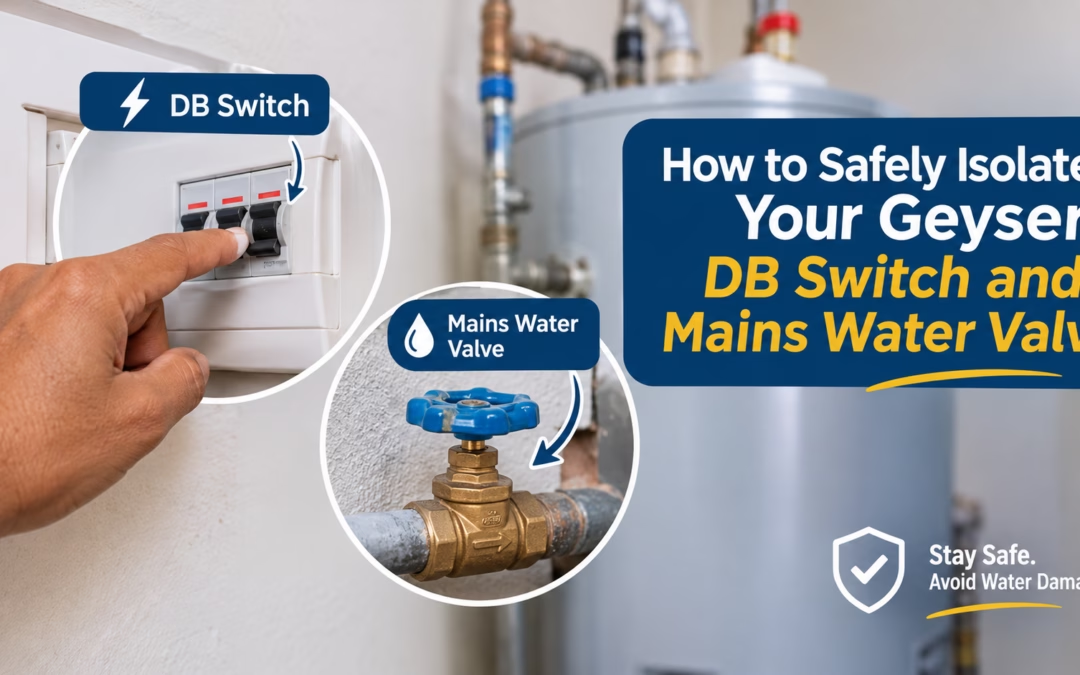
To isolate your geyser safely, switch off the geyser breaker on your distribution board (DB), then close the mains water valve. Always cut the electricity first, shut the water second, and call a registered professional third.
Across KwaZulu-Natal, homeowners in Westville, Umhlanga, Pinetown and Amanzimtoti face the same threat: a leaking geyser that mixes water with live electricity. Moreover, Durban’s humid coastal air speeds up corrosion, while summer thunderstorms and power surges add extra strain. Therefore, you should know exactly where your geyser switch and water valve sit before a problem starts. This guide walks you through each step in plain language, so you can protect your family, your ceiling and your insurance claim.
What are a geyser DB switch and a mains water valve?
A geyser DB switch is the breaker on your distribution board that gives power to your geyser element, while a mains water valve is the shut-off on the pipe that feeds water into your home. Both controls matter because a leaking geyser creates two hazards at once: water and electricity. Learn these terms before an emergency:
- DB (distribution board): The metal box, often in a garage, passage or kitchen cupboard, that houses your circuit breakers.
- Geyser breaker: The switch labelled “geyser” or “HWC” (hot water cylinder) on the DB.
- Geyser isolator: A separate wall switch that cuts power to the geyser locally; not every home has one.
- Mains water valve: The main shut-off on the pipe entering your property, usually on the house side of the water meter.
- Geyser isolating valve: A smaller valve on the cold-water pipe that feeds the geyser.
Conclusion: switch off power first, then water, then call a pro
To isolate your geyser safely, flip the geyser breaker at the DB, close the geyser or mains water valve, and relieve pressure from a hot tap. Consequently, you limit ceiling damage, prevent electrical hazards and give your plumber a safe starting point. Furthermore, practising the drill now means that you, rather than panic, control the situation when a leak strikes.
Want to stop the next leak before it starts? When your geyser shows its age, book geyser fixes and replacements in Durban with a professional team.