
Table of Contents
TL;DR: Key Takeaways
- Hot-only problems point to your geyser. If cold water is also rusty, smelly, or murky, suspect your municipal supply or pipework instead.
- A spent sacrificial anode drives most internal decay. This rod corrodes on purpose so your steel tank does not.
- Rusty water at the overflow pipe is urgent. Isolate the power and water, then call a registered plumber.
- Maintain on a schedule. to keep things running smoothly Kwikot recommends servicing geyser every 2 - 3 years
Introduction
Your geyser, the hot water cylinder that stores and heats your household’s water, works harder than almost any other appliance in your Durban, Pietermaritzburg, or Ballito home. So when the hot tap runs brown, smells of sulphur, or looks cloudy, take it seriously. Rusty, smelly, or murky hot water usually signals internal geyser decay, but your tank is not always the culprit.
Our blog shows you how to diagnose each symptom, decide what you can safely do yourself, and recognise when a registered plumber must step in. Along the way, you will also learn why KwaZulu-Natal’s coastal climate speeds up corrosion.
Why Is My Hot Water Rusty?
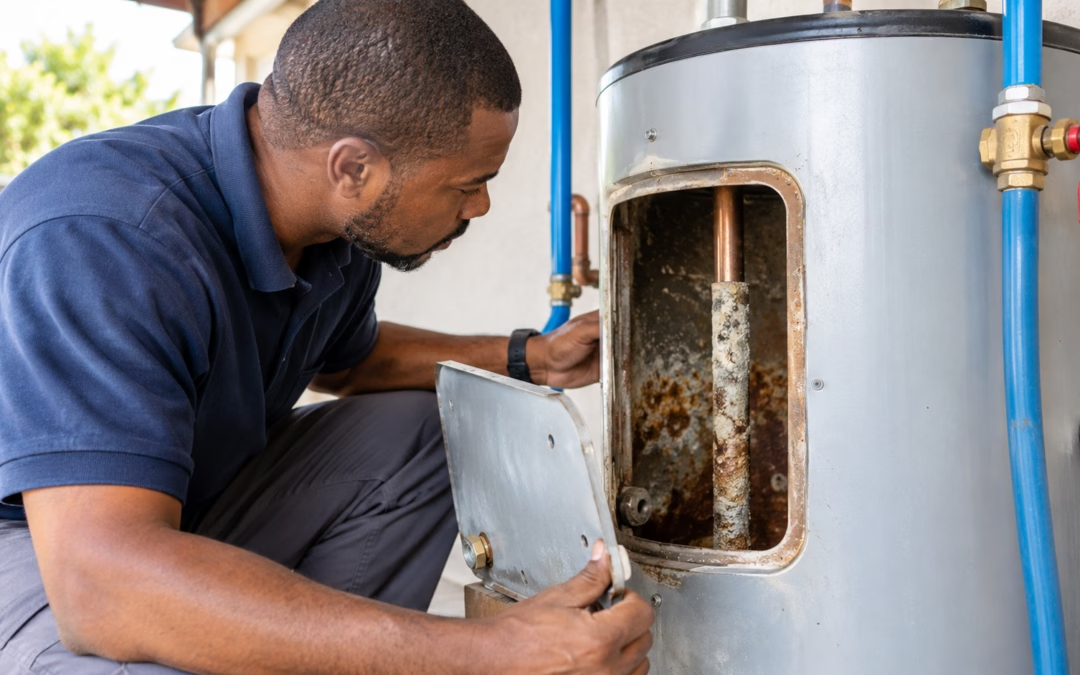
Rusty hot water usually means your steel tank is corroding because the sacrificial anode has run out. The anode is a magnesium or aluminium rod inside the tank that corrodes first, so the steel does not. Once it wears away, the tank itself becomes the next target, as Kwikot explains in its guide to inspecting the sacrificial anode.
Check these clues
- Hot tap only: Your tank is likely rusting from the inside.
- Hot and cold taps: Old galvanised pipes or the supply are more likely.
- Rusty brown water dripping from the overflow pipe: Act today. Kwikot lists this as a warning sign of a failing geyser, and a burst can follow.
Why Do Geysers Decay Faster in KwaZulu-Natal?
Coastal humidity and salt air attack the outside of your geyser, while water chemistry attacks the inside. Along the North and South Coasts, inspect the drip tray, valves, fittings, and roof-space pipework every few months for green or white corrosion. In addition, borehole water can carry iron, sulfate-reducing bacteria, and sediment that stress your tank and anode. Kwikot advises replacing the anode more often in hard or corrosive water, so shorten your interval if you notice staining or scale.Finally, note when the problem started. A symptom that appears after a municipal shutdown or burst main points to disturbed sediment rather than tank failure.
Frequently Asked Questions
Is rusty hot water safe to drink or shower in?
Small amounts of rust rarely harm you, but they signal tank corrosion that can end in a burst. Use cold tap water for drinking and cooking, and book an inspection promptly.
How often should I replace my geyser’s sacrificial anode?
Replace it every 3–4 years, and sooner in hard or corrosive water, according to Kwikot. A plumber should remove and check the rod rather than guess.
How long does a geyser last?
A well-maintained geyser can last up to 15 years, according to Kwikot, but neglected units often fail much sooner. Rust at the overflow, repeated element failures, and a leaking tank all signal the end of its life.
Why does only my hot water smell like rotten eggs?
Hot-only smells point to hydrogen sulfide forming inside the geyser, where bacteria and the anode react. Flush the tank, check the thermostat, and ask your plumber about the anode.
What temperature should I set my geyser to?
Set it to about 60 °C to discourage bacterial growth, and add a mixing valve at the taps to prevent scalds. Legionella grows best around 37–42 °C, so avoid leaving a geyser lukewarm for long periods.
Can I fix internal geyser problems myself?
You can run the three-glass test, flush hot taps, and inspect the drip tray. However, leave anode, valve, element, and thermostat work to a registered plumber, because it involves electricity, pressure, and compliance paperwork.
Does insurance cover a burst geyser?
Often yes, provided you installed an NRCS-approved geyser correctly (NRCS stands for National Regulator for Compulsory Specifications). However, insurers may refuse claims when maintenance lapses, so keep your service records and check your policy wording.
Conclusion
Rusty, smelly, or murky hot water rarely fixes itself. Instead, the pattern tells you where to look: hot-only symptoms point to anode failure, bacteria, or sediment inside your geyser, while hot-and-cold symptoms point to your supply or pipework. First, run the three-glass test. Next, act fast on any rust at the overflow. Finally, book a service with a PIRB-registered plumber and keep your records. Do not wait for a burst, because one inspection now costs far less than flood damage later. Do that, and your KwaZulu-Natal home keeps its hot water clean, safe, and flowing for years.
Flushing a water heater vs replacing it: which fixes rusty, smelly hot water?
Short answer: Flush first if the heater is under about 8 years old and the rust is loose sediment. Replace it if the tank is corroding, leaking, or older than about 10 years. For a rotten-egg smell, flushing plus disinfection or a new anode rod usually works. A new heater can bring the smell back if the water chemistry stays the same.
| Factor | Flushing the tank | Replacing the heater |
|---|---|---|
| Fixes rusty hot water? | Sometimes. It clears loose rust flakes and sediment from the tank floor. If the tank wall itself is rusting, brown water returns within days or weeks. | Yes, when the tank is corroding. A new tank removes the source of the rust. First confirm that the rust appears only in hot water and not from the cold tap too. |
| Fixes rotten-egg smell? | Often partly. It removes sediment where sulfur-producing bacteria live. For a lasting fix, add a disinfection step or swap the anode rod. | Usually, but it can return. The smell comes from bacteria reacting with the anode rod and sulfate in the water, so the same water can cause it again in a new tank. |
| How long the fix lasts | Weeks to months. Sediment builds up again, so flushing is repeated about once a year. | Years. A tank water heater typically lasts around 8–12 years with upkeep. |
| Typical cost | Low. DIY with a garden hose, or a short plumber visit. | High. New unit plus installation, and sometimes new valves or fittings. |
| Time needed | About 1–2 hours of work, plus time for the tank to cool before draining. | About 2–4 hours for a plumber, longer if pipework or venting must change. |
| Best choice when | The heater is under about 8 years old, has no leaks, and the water runs clear after flushing. | The heater is over about 10 years old, leaks, rusts at the base, or the water stays brown after flushing. |
Quick checks before you decide
- Run the cold tap. If cold water is also rusty or smelly, the cause is the pipes or the water supply, and neither flushing nor replacing the heater fixes it.
- Fill a clear glass with hot water. Reddish-brown flakes or cloudy water point to tank sediment or corrosion.
- Flush the tank once. If the water stays clear for several weeks, flushing was enough.
- If the rust returns quickly, the tank leaks, or the heater is past 10 years old, replace it.
Safety first
Turn off the power or gas and let the water cool before flushing, because hot water scalds. If you smell gas around the heater itself rather than sulfur at the tap, leave the area and call your gas supplier or emergency services.