Table of Contents
Key Takeaway Section
-
Cut the Power Instantly: Always flip the "Geyser" breaker switch to the "Off" position at your main distribution board before touching any plumbing to eliminate lethal shock and fire hazards.
-
Isolate the Incoming Flow: Close your main property boundary stopcock clockwise to stop municipal water from continuously fueling the indoor flood.
-
De-pressurise the Network: Open every hot water tap fully to drain the remaining water out through your waste pipes rather than through your structural ceilings.
-
Insist on Legal Compliance: Only hire a Plumbing Industry Registration Board (PIRB) registered professional to guarantee your repair receives a mandatory Certificate of Compliance (CoC), protecting your building insurance policy.
A faulty water heater needs an immediate response. Geyser problems typically happen during cooler winter months or during peak holiday seasons. When a pressurised cylinder fails, time becomes your biggest problem enemy. Our Guide guide outlines the what local homeowners and business owners must do to stop water damage.
.
The 4-Step Emergency Protocol: Take Control Immediately
When a geyser has leak or ruptures entirely, panic doesnt solve the problem Doing these four steps immediately helps control over your residential or commercial environment before professional plumbing support arrives on-site.
Step 1: Isolate the Electricity
Water and electricity are a lethal combination on any property. When an internal cylinder fails, water tracks directly along the electrical conduit lines, dripping straight into light fittings, switches, or your main distribution (DB) board. Furthermore , if the geyser tank empties while the heating element stays live, the element will quickly overheat, burn out, and could become a fire hazard.
Step 2: Shut Off the Main Water Supply
Once you neutralize the electrical risk, you must stop more water from feeding the disaster. A standard residential water heater holds anywhere from 100 to 200 liters of water under intense pressure, while commercial boiler units hold much more.
- Find your property's main water shut-off valve (stopcock). For homes in Salt Rock, you will typically find this valve inside a plastic box near your front boundary wall or driveway.
- For local commercial businesses Find the primary isolation valve inside your dedicated ground-floor utility closet or near the main boundary line.
- Turn the valve firmly clockwise until it closes completely.
Step 3: Open the Hot Water Taps to Relieve Pressure
Even after you switch off the main water supply, the geyser tank and its connected piping still hold pressure. It continues to force water out of the fracture or split in the tank.
- :Go to your bathrooms, kitchens, or sculleries and turn on all hot water taps completely.
- Leave the cold taps alone, as opening them will not relieve the hot water line.
- The Result: Opening the hot water taps relieves the internal pressure within the plumbing network, which slows down the leaking at the geyser site, and redirects the remaining water safely down your drains rather than through your ceilings.
Step 4 Mitigate Consequential Property Damage
Now that you have halted the active flow of electricity and water, you can safely turn your attention to salvaging your property, business assets, and personal possessions.
- : Move valuable electronics, furniture, documents, and business inventory away from water
- Place buckets or plastic storage bins underneath active drips to catch falling water.
- If you manage a retail space, restaurant, immediately cordon off wet floors to prevent slip-and-fall injuries among staff and customers.
- Use a wet-dry vacuum to remove moisture from carpets, which prevents toxic mold growth in our highly humid coastal climate.
Identifying the Emergency: Leak, Burst, or Electrical Fault?
It's not necessary or helpful to panic . But it is important to understand what is actually happening in your roof as this help you give the plumber an idea of the type of problem he can expect to find.
Geyser Diagnostic Breakdown
| What You See or Hear | The Probable Cause | Urgency Level | Your Immediate Action |
|---|---|---|---|
| Water pouring through the ceiling / heavy continuous flow from the exterior overflow pipe | A fully ruptured inner cylinder tank or a failed major safety valve. | Critical Emergency | Follow the 4-step protocol immediately. Call and then call a plumber. |
| No hot water at all, but water pressure feels completely normal | A burnt-out heating element or a faulty thermostat. | Moderate | Turn off the geyser circuit breaker. Call a professional to replace the specific components. |
| Constant dripping from the exterior overflow pipe on your roof line | A malfunctioning Pressure Control Valve (PCV) or Temperature & Pressure (T&P) valve. | Mild to Moderate | Monitor the drip rate. If it leaks more than a few liters daily, schedule a valve replacement to prevent high water bills. |
| Water feels lukewarm and never reaches full temperature | Heavy limescale accumulation on the heating element or a failing thermostat. | Mild | Book a standard plumbing maintenance visit during normal working hours. |
| The DB board trips the moment you switch the geyser on | A short circuit, usually caused by water leaking directly onto the electrical terminal cover. | High Emergency | Leave the geyser breaker off permanently. Call a professional asap do not force the breaker back up. |
Disclaimer: This diagnostic breakdown is for informational purposes only. Always prioritize safety and consult a qualified professional for electrical or plumbing emergencies.
Why Geysers Fail Sooner on the Coast
The cosstline in the North coast is great. It treats people who live there incredible natural beauty, but its very hard on your geyser and household appliances. If you have noticed that outdoor light fittings, gate motors, and vehicles degrade faster here than they do inland, your geyser goers through the same corrosion.
- Salty, Humid Ambient Air: The air on the Dolphin Coast carries massive concentrations of sodium chloride (salt) and moisture. Even though your geyser sits inside a ceiling crawl space or a utility cupboard, this humid, salt-laden air circulates around it constantly. Consequently, atmospheric corrosion attacks the external copper pipes, brass valves, electrical connections, and the outer casing of your geyser far quicker than in drier, inland areas.
- High Municipal Water Pressure and Chemistry: Water chemistry varies dramatically across KwaZulu-Natal. The local municipal water lines experience regular pressure fluctuations, especially during peak holiday seasons when thousands of visitors arrive in towns like Ballito and Salt Rock. These quick pressure spikes put pressure on the internal welds of your geyser. Additionally, dissolved oxygen and minerals in the water supply act as aggressive oxidising agents, that exploit tiny imperfections in the geyser’s protective internal lining.
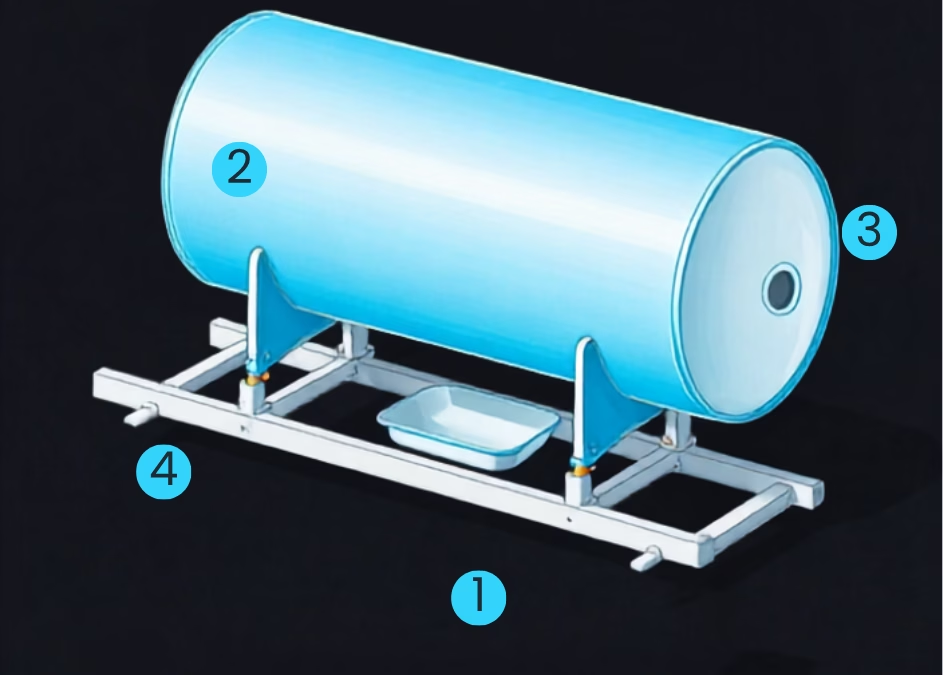
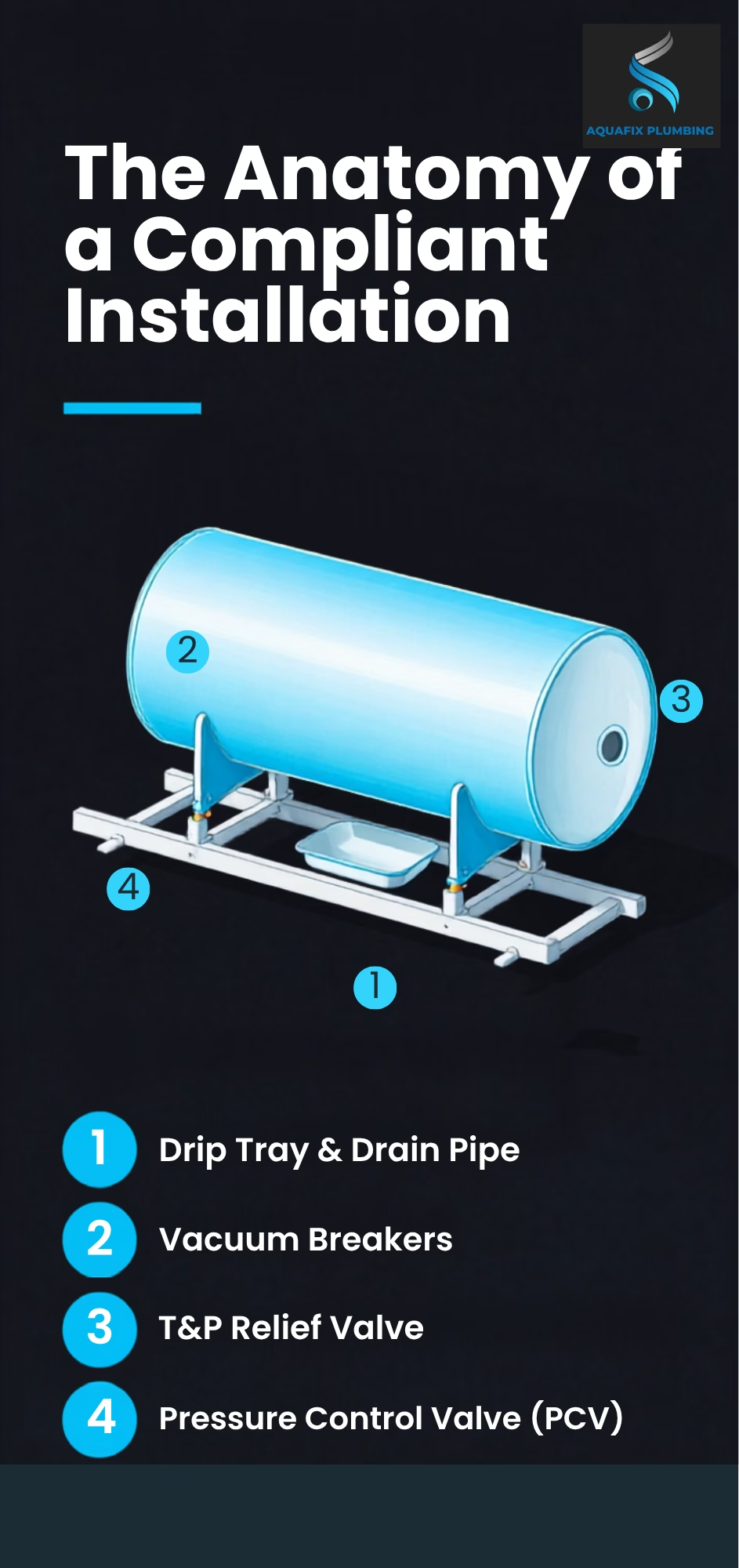
The Anatomy of a Compliant Installation
When an insurance assessor climbs into your roof space after a flood, they check off a very specific list of mandatory safety and structural components:
- The Drip Tray and Drain Pipe: The geyser must sit entirely within a robust, corrosion-proof drip tray. This tray must connect to a dedicated PVC drain pipe that slopes downward and exits your building envelope, venting visibly outside. This ensures that any minor leak drains safely outdoors before touching your ceiling.
- Vacuum Breakers: Plumbers must install these tall brass valves vertically on both the cold-water inlet and hot-water outlet pipes. They prevent a vacuum from forming inside the plumbing network, which could otherwise cause your internal steel tank to collapse inward when municipal water pressure drops.
- Temperature & Pressure (T&P) Relief Valve: This vital safety valve vents steam if your thermostat fails. It must feature a drainage line constructed entirely of metal (copper or galvanised iron—never plastic) that leads directly to the exterior of the building.
- Pressure Control Valve (PCV): This valve regulates incoming municipal water pressure down to the safe operating limit of your specific geyser (typically 400 kPa or 600 kPa). Without it, a sudden pressure spike from the municipal grid will rupture your tank instantly.
Frequently asked questions
What should I do first when my geyser bursts?
Switch off the geyser’s circuit breaker at your main electricity DB board and turn off your property's main water supply valve immediately. Taking these two steps eliminates electrical shock hazards, prevents heating element fire risks, and stops additional water from flooding into your property.
How much does it cost to replace a geyser in Salt Rock?
A standard residential geyser replacement along the Dolphin Coast generally costs between R8,500 and R14,500, depending on the tank size and installation complexity. This price estimation typically covers an SABS-approved 100L or 150L geyser, compliance components, labor, and the mandatory PIRB Certificate of Compliance.
How often should I service my geyser?
You should have a licensed plumber service your coastal geyser every 12 to 18 months. Regular servicing involves checking all safety valves, inspecting the electrical connections, and replacing the sacrificial anode rod to protect the steel tank from internal rust.
Will my building insurance cover a burst geyser claim?
Yes, most standard South African building insurance policies cover the replacement of a burst geyser and the repair of consequential water damage, provided the installation complies fully with SANS 10254 regulations. If the original installation is found to be non-compliant, insurers may reject the claim.
What is a plumbing Certificate of Compliance (CoC)?
A plumbing Certificate of Compliance (CoC) is a legal document issued by a PIRB-registered plumber certifying that your geyser installation complies fully with South African National Standards. Insurance companies need this certificate to process property damage claims legally.
What size geyser do I need for my home or business?
As a general rule, a 100-liter geyser suits a 1 to 2 person household, a 150-liter geyser accommodates 3 to 4 people, and a 200-liter or industrial setup is required for larger families or high-demand commercial operations. Choosing the correct size ensures energy efficiency and a reliable hot water supply.
How do I reset my geyser thermostat?
To reset a standard South African geyser thermostat (such as a Kwiktherm), switch off the main geyser circuit breaker, unscrew the protective terminal cover plate on the geyser, locate the tiny red thermal cutout safety button on the body of the thermostat, and press it firmly with a small screwdriver until it clicks. Always replace the cover plate before turning the main electrical breaker back on. If it trips again immediately, a deeper short circuit exists.
How do you know if your geyser thermostat is faulty?
You can identify a faulty geyser thermostat if your water is completely cold despite the electrical breakers being on, if your water is scalding hot and steam vents from your roof, or if your DB board trips repeatedly. A professional uses a multimeter to test for electrical continuity; if there is no continuity when the water is cold, or constant continuity when it is hot, the unit is dead.
What is the most common cause of a thermostat failure?
The most common causes of geyser thermostat failure are severe power surges, localized overheating from limescale buildup on the element pocket, and water ingress through slow flange leaks. In Salt Rock, regular electrical load fluctuations and heavy mineral buildup degrade internal contacts quickly.
How do you know if your thermostat needs to be reset?
Your thermostat needs a manual reset if your geyser completely stops heating water, but your DB board circuit breaker has not tripped. This indicates that the safety safety thermal cutout feature (built into SANS-compliant thermostats) successfully deployed to kill power locally after detecting an unmanaged temperature spike or a major electrical grid fluctuation.
Conclusion
Managing a geyser emergency along the Dolphin Coast requires quick action and adherence to national plumbing standards. When a water heater ruptures, your priority is to isolate the electricity and water supplies immediately using the main controls on your property. Because the local coastal air and water conditions wear down components faster than they do inland, regular inspection of your sacrificial anode rod remains essential to avoid sudden structural failures. Whether you are safeguarding a private household or a large commercial enterprise, always rely on licensed, PIRB-registered plumbing teams to protect your investments and keep your building insurance intact.