
Table of Contents
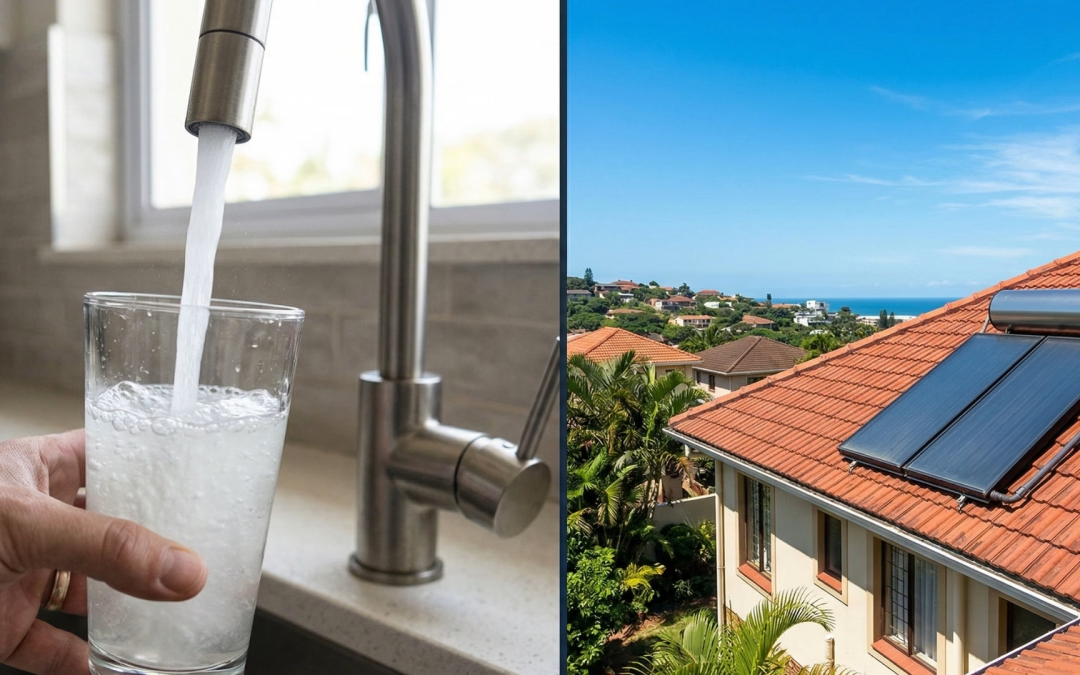
Cloudy or murky water from solar geyser
If you’ve noticed cloudy water coming from your solar geyser, you aren’t alone. In the humid, coastal environment of Durban, our plumbing systems face unique challenges—from salt-air corrosion to fluctuating municipal water pressure.
At AquaFix Plumbing Services, we know that a solar water heater is big investment for your home or business. When that water turns murky, it’s usually a sign that your system is in need of maintenance. Below, we list the reasons deep this happens, how to fix it, and why its highly likely that the sacrificial anode is the problem.
Why is My Solar Geyser Water Cloudy?
Most of the time Cloudy or milky water is caused by one of two things: trapped air bubbles or dissolved mineral particulates. While air bubbles are harmless and dissipate if you let a glass of water sit, persistent cloudiness often points to sediment buildup or anode degradation.
What does a Sacrificial Anode do?
Inside every high-pressure solar geyser is a magnesium or aluminum rod known as the sacrificial anode. Its function is to corrode so your tank doesn’t.
- How it works: Through a process called electrolysis, the anode attracts corrosive elements in the water.
- The Result: Over time, the rod dissolves. If it isn’t replaced, the decomposing metal creates a “snow-like” sediment that turns your hot water into a cloudy or grey colour.
- The Durban Factor: Our water quality in KZN can vary. High mineral content can speed up this degradation, meaning a rod that should last two years might fail in eighteen months.
Sediment and Limescale Accumulation
If you haven’t flushed your system recently, calcium and magnesium deposits (limescale) settle at the bottom of the tank. When the water heats up, these minerals are stirred, leading to a cloudy appearance. This is particularly common in areas around Durban KZN.
Solar Geyser Pump vs. Thermosyphon: Why Your Water Isn’t Circulating
A common complaint we hear at AquaFix Plumbing Services is that the water is cloudy and not reaching the right temperature. Understanding how your water moves is the first step to diagnosing the problem.
The Passive Thermosyphon System
In Durban, thermosyphon technology is used in the majority of household solar geysers. The natural law that hot water rises is the basis for this. The collector panels are positioned below the tank.The solution: If your water isn’t flowing here , it means there is either an air lock or a blockage brought on by the sediment that’s clouding your water.
The Pumped System (Active)
Larger homes or commercial properties often use a pumped solar system. Here, a circulating pump pushes water between the panels and a tank found elsewhere (often inside the roof or at ground level).
- Why it fails: If your solar geyser pump is not running, the water in the panels will overheat and vibrate , stirring up the degraded sacrificial anode particles and sending cloudy, lukewarm water into your taps.
Direct vs. Indirect Solar Systems
Understanding the difference between direct and indirect solar systems is key to diagnosing water clarity.Indirect systems use a heat-exchange fluid that never touches your tap water, whereas direct systems circulate the water itself through the solar panels. If you have a direct
system in a hard-water area like parts of Durban, mineral buildup is a more likely culprit for cloudy water.For a deeper dive into how these systems function and which is best for your property, the Sustainable Energy Society Southern Africa (SESSA) provides great resources for homeowners
looking to go green.
How to Fix Cloudy Solar Geyser Water
If you are wondering, “How do I get rid of milky water in my pipes?” follow these professional steps.
Step 1: Perform a Visual Test
Get a class and fill it with some water
- If it clears from the bottom up: It means that it is just air. You probably have a small leak or a faulty air release valve.
- If it stays cloudy or settles at the bottom: You have a sediment or anode problem.
Step 2: Replace the Sacrificial Anode
This is the most effective fix for cloudy water. We recommend checking the anode every 12 to 24 months.
- Drain the tank: A professional plumber will shut off the water and power/solar feed.
- Inspect the rod: If the rod looks like a “eaten-away” wire core, it’s finished.
- Install a new rod: We use high-quality magnesium anodes suited for Durban’s water conditions.
Step 3: Flush the Tank
Flushing the system removes the “mud” of minerals at the base. This improves heating efficiency and clears the water instantly.
Why Choose AquaFix Plumbing Services?
We aren’t just plumbers; we are your neighbors. We understand the specific plumbing codes and environmental factors that affect Durban homes and businesses.From Ballito to Amanzimtoti, we provide transparent pricing and expert solar geyser repairs.Don’t let cloudy water ruin your morning. Clear, hot water is just a phone call away.Contact AquaFix Plumbing Services today for a comprehensive solar geyser inspection.
Summary Checklist for Homeowners: Solar Geyser Fixes (Durban)
Issue: Milky Water
- Likely Cause
- Air bubbles or Anode wear
- Recommended Action
- Test in a glass; call a plumber for anode check.
Issue: No Hot Water
- Likely Cause
- Pump failure or Thermosyphon air lock
- Recommended Action
- Check controller power; bleed the system.
Issue: Sandy Residue
- Likely Cause
- Scale buildup
- Recommended Action
- Flush the geyser tank.
Issue: Rusty Water
- Likely Cause
- Tank corrosion
- Recommended Action
- Immediate inspection; the tank may need replacing.